Critical Rants

A site that does exactly as its name implies: Critically ranting about whatever the author feels like. Most commonly these ramblings take the form of media reviews, but occasionally they bleed over into religious or political issues.

Thursday, March 14, 2013

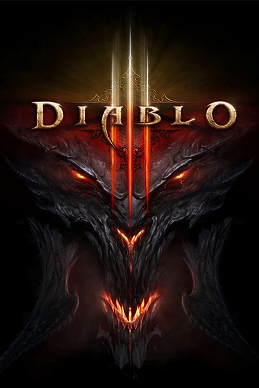
Game Review: Diablo III

And the heavens shall tremble.

8% crit chance increased for energy twister? Say hello to millions of gold.

I have pondered the meanings of Diablo 3 for a long time. What makes it so good/bad? What did I truly miss about Diablo 2 (Sadly, as I am a young one I have never played D1) Well- I've finally narrowed it down, after much meditation (seriously) and decided on what to post

Rating:  5.6/10

Why such a low rating? Diablo 3 was, without a doubt, the most expected game of all time, and Blizzard failed to deliver. Why was it so bad? Well in all honesty- I enjoyed Diablo 3. The thrill and anxiety of  hearing the unforgettable *Twang* as you receive that Legendary drop. Who cares if you know its going to reveal bad- everyone enjoys that deep gold laser shooting up into the sky.

After a long hard day of slaying, you return to camp to see what you have found. Crappy rare. Crappy rare. Crappy rare. Why did I pick that up? I could sell that. Every so often, you get a thrill in your heart- could it be? You review the stats that have been revealed- Holy crap!  That was an amazing item! I'm sure everyone can relate to this scenario, and especially when you're in a group of friends, its prideful to be on the top *dusts knuckles*. I, however, want to pose the biggest question of all time: the reason for my low Diablo 3 rating.

Why are you getting better equipment?. . .

In Diablo 2, the first answer that comes to mind is: To kill stronger monsters! A worthy and noble goal to those avid fans of the Hack-And-Slash game play. The difference is in Diablo 2. . . It was Different. Perhaps that sentence was a bit perplexing, but let me reiterate and send my point across- playing Diablo 2 was a different experience every game. It held a sense of childlike wonder when you went into the unknown and explored every time you started the game. That is the nostalgia we gamers feel when we play Diablo 2 today.

In Diablo 2, it was about killing the monsters. In Diablo 3, It's about the loot.

 The story can speak for itself, for every single critic out there will agree with me that it was probably the worst thing Blizzard has ever done.You don't even have one- You're goal is to chase down Ba'al and Azmodan and send them into oblivion- only to find out that the evil is now all together and you have to fight him in heaven.

The whole story can be summed up with just a few sentences, and its not even a summary. That is, legitimately, your entire plot line. You knew what characters were evil, what characters were good, and what characters were going to help you every step of the way. It was pathetic that the only surprise I had in the entire plot line was that the emperor helped me, and in hindsight, I should have caught that too.

In addition to the lack of story, the caverns and dungeons were the same every time. You knew what was (or what could be) down in every cavern- the only difference was the loot. To add to the monotony, once you get into inferno mode, your stuck with having to have a specific build. In Diablo 2, your skill tree could horribly suck- and that's okay. You could still survive and beat the game with a build that was fun- but not effective. In Diablo 3 however... That's not the case. Until you have enough gold to buy Deity-Level equipment, you can't have a fun build. Oh, and did I mention that you won't get that much gold unless you have a friend helping you or- get this -you buy gold from Blizzard's auction house. Really Blizzard? Why have you sunk that low?

So, if you're a moral gamer like me, you don't buy gold from the auction house. Hell (see what I did there?) forbid you play the game without using it though. You'll never get past Nightmare. Blizzard developed a crafty algorithm to make 99% of drops unusable. So you hit Hell difficulty- here's what you have:

Wizard: Starting on CM or Blizzard kite build
Barbarian: WW barb.
Monk: You didn't play a monk until patch 1.07
Witch doctor: acid. lots of acid. Or evil teddy bear summons.
Demon hunter: Traps and sentries.

Go on. Tell me you played something different. You're lying. Unless you got help from a friend or used the auction house, and even if you DID use the auction house, those were the only builds you did.  If you use an ineffective build- You die. You aren't even at the highest difficulty yet!

Do you know whats missing from Diablo 3 that would have made it so great? Fun. Its not there.

You *must* have a cookie cutter build unless you want to buy items from the auction house, and even if you do, most people still use the cookie cutter builds. Diablo 3 isn't a game- It's a Job. Why are you coming home from work, just to work again? It doesn't make any sense. Although it's a recent release, Torchlight 2 (will be reviewed upcoming) was a far better game, delivering what Diablo 3 couldn't and adding more to it.

Also, you have to be online to play. That's all I need to say about that subject.

-The F.A.W.X.E.

Book Review- A Memory of Light (2013)


   I know I'm a couple of months late for this one, but that's fine.
   For those of you that don't know, A Memory of Light is the conclusion to Robert Jordan's massive "Wheel of Time" epic fantasy series. And after twenty-two years, thirteen books, and the death of the original author, I now have it sitting on my bookshelf. It's been a long journey, and many fans have eagerly awaited it's release, although they've been worried about how it will turn out, for good reason.
   So I guess the big question for this book is: "Did AMoL do justice to the previous books in the series and end in a satisfying way?" The answer to that question would be: "Kind of."
   The series has been building up to this point for a LONG time, and so it's logical that the book would be 900 pages long and revolve around one gigantic battle. The book kicks off at a fairly brisk pace, finally bringing that confrontation between Rand and the others that we've been waiting for now for two books, and kicks right into the action after that. There's a lot to do, and only so much time to do it. The actual Last Battle starts around page 500 and continues until the end of the book, so that by itself will turn away many people who aren't fans of the series. A huge series has to be accompanied by a huge conclusion.
   While the way Brandon handled Mat Cauthon's character was highly criticized in the previous books, I feel like he's reached a balance with him in this book. He's not the old Mat from the Robert Jordan days, but he's closer to that while retaining some of the better aspects of the Brandon Sanderson Mat.
   Brandon handled Perrin pretty well for the first half of the book, but I feel like he slacked off with him a lot in the second half, probably because there just wasn't enough space.
   Rand was Rand. Sanderson did a great job transforming him into a dark shadow of himself in The Gathering Storm, and although he was a little too perfect in Towers of Midnight, we see that in this last book he's just as uncertain and fearful as he ever was; he just accepts that fear. Brandon did a phenomenal job with Rand's character throughout the last three books.
   Egwene was the same paranoid, power-hungry, demanding Amyrlin seat we saw in book 13, with a little bit of the awesomeness we saw in book 12.
   Elayne was annoying as always. There was nothing Brandon could do at that point to save her.
   Nynaeve was barely even there. She had one specific task in the book, and that was all we saw of her.
   I thought Moiraine would actually end up being important, but apparently I was wrong. All she does is keep Rand and Egwene from ripping each other's heads off at the beginning of the book, and convince them to march to Shayol Ghul as part of one gigantic army instead of separate people. She convinces Egwene to go with Rand's plan, and that's about it. So the past four books where Mat had to save her and the fate of the world depended on it was actually not really that important.
   Slayer was great as usual.
   Aviendha was her usual self. She changed a little when Sanderson took the reigns, but she wasn't that different compared to how much Mat changed.
   Tuon was...Tuon. What else is there to say? Her relationship with Mat is just as awesome as it was in the tenth and eleventh books.

Most of the characters were great throughout the book. The only problem really was that not all the loose ends were tied up. Not even close. Like maybe half of them. There were so many stories that went unresolved, but that's because Brandon only had so many pages to use. He did a great job for what he had, and the plotlines that were resolved were resolved in a very satisfying way. Recommended highly to WoT fans, and for anyone who can trudge through the first 13 books.

Thursday, January 17, 2013

Yet another author

Hopefully, More shall be accomplished by me then by my predecessors.  I'll be reviewing more technological things. Movie reviews, Game reviews, and other things ill be more akin too. You'll still get your great music reviews from everyone's favorite Ranting Critic. Stay tuned for my first post coming soon!

Friday, January 11, 2013

Movie Review- The Amazing Spider-Man (2012)


The Amazing Spider-Man has had some very mixed reviews from fans and critics, and there are several good reasons, the strongest among them being that we already saw a Spider-Man origin film in 2002 with the film Spider-Man. Many deem this movie to have been unnecessary, and there are several other good reasons for criticizing this movie.
A big reason is that Peter Parker's personality is very different from that portrayed in the comic book. While in the comic he was a quiet, bookshy, teenager who had few problems with his guardians and feared facing the bullies at school, the Peter Parker in the movie was sassy, loud, impulsive, constantly stood up to the people who gave him trouble at school, and had constant problems with his uncle. The character of Parker in this movie is WAY off the mark, and the entire film greatly suffers as a result.
While this is intended to be a reboot for out masked friend, the plotline and execution of the story follows the same outline that the original trilogy of movies followed to a tee. The villain meets the same fate at the end of the movie for the same reason that the Green Goblin, Harry Osbourne and Doctor Octopus met in the original movies. Furthermore, it was released into theaters in the month of July about a week before the release of The Dark Knight Rises, which it couldn't possibly hope to compete for.
There honestly isn't much more to say than that. Think of every cliche superhero movie you've ever seen, and you've got The Amazing Spider-Man. While it was entertaining, it was very unnecessary and redundant less then ten years after the first Spider-Man came out. 1/5 star rating. Recommended for those who are bored and can't find anything better to watch.

Movie Review- The Hobbit: An Unexpected Journey (2012)


I know I'm reviewing this movie a month late, but better late than never.
Most people have read Tolkien's 1937 fantasy novel The Hobbit, but for those of you that haven't I'll briefly summarize the parts of the novel that this film covers.
Bilbo Baggins is a Hobbit living quietly in the Shire, until one day he is visited by the wizard Gandalf, who used to visit the Shire when Bilbo was a boy and is known for his particularly spectacular fireworks. He invites Mr. Baggins to go with him on an adventure to recover a lost Dwarven fortress from the infamous dragon Smaug, but at first Bilbo refuses, as Hobbits are uncomfortable going on adventures or doing unexpected things. After being visited by the thirteen dwarves that are also sharing in the quest, he is convinced to go with them.
The movie, for the most part, does a good job of keeping this part of the story in line, but has some major differences in the additional parts of the movie that were not found in the novel but in the appendices for Lord of the Rings, but I'll get to that later.
The biggest thing that critics hated was that it was a slow movie that was also too long, at two and a half hours. While I can see the reasons behind their complaints, I am inclined to disagree with them. The problem was not in how slow the movie was, but rather the balance between action and the slower parts. One of the biggest issues I had with the movie was that the slow parts are VERY long, and they drag on for a long time, but the action scenes are also very long, and they begin to get tedious toward the end of the movie.
Another thing that critics had a problem with was that there was very little character development, but this is because Peter Jackson is only drawing from material found in the first six chapters of the book. He's only using material from less than a third of the book, so it is understandable that the character development was hard to see if not scant.
Honestly the biggest problem I had with this movie was that it had a hard time finding the balance between the comical and the serious. The novel of The Hobbit tends to have a very comical, ridiculous tone, while its successor The Lord of the Rings is very dark and serious, and the appendices found in the back of The Return of the King describe events that occurred at the same time as the Hobbit that had the same tone that LotR did. So Peter Jackson has to find a balance between the two, and he often comes short of success, particularly in the action scenes that involve fighting. While he made an active effort, there were some times in the film where he tried too hard, making the film suffer as a result.
So what do I rate the film? Out of ten stars, I'd give it a seven. That's 3.5/5 stars or 2.75/4 stars. It was still a fairly entertaining movie, and despite some of the major differences it has with the timeline it still follows the actual novel very well. Thorin and Bilbo have particularly good acting, and Gandalf and Gollum are fantastic as they were in the Trilogy. Tolkien fans will like the movie, and while the hardcore fans like me will probably grumble, they'll still like it. Recommended to anyone who enjoys fantasy. If you don't, then this is about as far into the fantasy genre as you can get.
Expect a rant about the differences between book and movie soon, and believe me, there will be one.

Monday, October 1, 2012

Music Review- The 2nd Law by Muse (2012)

Release Date: September 28, 2012
Length: 53:49
Label: Helium 3, Warner
Producer: Muse, Nero

The sixth album by British rock group Muse was released just a few days ago. Like most other Muse albums, this record has had some mixed reviews. Some love it, but others say it leans too heavily on Queen, something they've been accused of doing before. But you aren't here to read other people's opinions. If you're reading this, than chances are you want to hear my take on it.
The 2nd Law kicks off with Supremacy, a catchy song that has ridiculous lyrics that at the same time almost expect you to take them seriously. Great bass line, great riffs. Next up we've got Madness, a song about the conflicts in a relationship that has a pop feel similar to "Undisclosed Desires" off their previous CD. Very catchy song. Panic Station, the next track, would fit right in with a Queen album, sounding a lot like "Another One Bites the Dust." The next song is one many of us heard at the Olympics a couple of months ago. "Survival" also has a very Queen-like feel, but unfortunately lacks a catchy chorus to keep people singing along. Follow Me is a decent song that has Muse sounding like U2 back in the early 90's, right around the time of Achtung Baby and Zooropa. Animals changes the feel of the album we've had thus with an acoustic sound that changes back to an electric halfway through the song. Like Survival, this song also lacks a chorus that can listeners can really feel and hear and the last minute sounds like a riot. The 2nd Law slows down in our next song, Explorers. At almost six minutes, this song has a more progressive feel than the previous songs. While one would expect the song to speed up about halfway through, it never does. Big Freeze speeds things up a little again with a catchy guitar melody, especially near the end of the song. Mat Bellamy gives up the microphone to bass player Chris Wolstenholme for the next two songs. His voice is okay, but very different from Bellamy's style we've all grown used to. Liquid State brings back the almost metal feel that Supremacy had, but much harder. Wolstenholme's voice fits in with the song very well, and it has a fairly good chorus that's easy to follow. The next song, The 2nd Law: Unsustainable, mixes techno and dance music with some more classical elements. The only thing I didn't really like about this song is that it didn't have any singing really. A very radical change from their earlier music. Followed up is the last song on this abum, The 2nd Law: Isolated System. This brings out the classical elements briefly seen in Unsustainable, but still doesn't have any singing. The only words in this song are given by different news stations that reference the Second Law of Thermodynamics, which says that an isolated system based on endless growth is unsustainable. Isolated System eventually picks up about two-thirds of the way through with a more poplike beat that's added to the piano melody that's been going on throughout the song. After another minute or so, the song fades out, ending the album.
The Good:
While Muse not-so-subtly combines elements of other popular music groups like Queen, U2, and Radiohead, they do it in a way that makes something relatively new that's also very catchy, no matter how ridiculous the lyrics are. Their songs remind you of other songs, but not in a bad way. They're very catchy, creative songs that act ludicrous while at the same time expect you to take them seriously, and there's a charm to that that I can't quite explain. The 2nd Law isn't as good as some of their previous albums, but it's got a few great songs in here.
The Bad:
A good number of the songs don't have very...identifiable choruses. They can be hard to sing along to. That's a bad thing when you want to have hit songs that get a lot of airplay.
This is a concept album. A very blatantly concept album. Muse takes their 2nd Law idea with the economic collapse and apocalyptic war and shoves it in your face from the first ten seconds of the record. Because of this, The 2nd Law feels like a soundtrack. That's good for those like me that don't mind concept albums, but for a lot of Muse fans that The 2nd Law won't be anything they expected, and they'll hate it. There are times in this record when the Queen influence does show a little too much, but I'm willing to ignore that and consider the songs at face value.
The Rating:
3.5 stars. Had some good songs, but there were also a few songs that were just weak. Still recommended for everyone to try. Not everyone will like it, but it's one of those things you've got to try listening to before you can really decide honestly whether you'll like it or not.
Top Songs:
Supremacy
Liquid State
Madness

Tuesday, September 11, 2012

The Return of the King: Differences Between the Book and Movie

The last film adaptation of the Lord of the Rings trilogy does a better job of following the book than its predecessor, but not as well as The Fellowship of the Ring.
The first thing you notice is that the timeline is a little different from the books due to the fact that the Frodo/Sam storyline ended in the last film with Faramir setting them free, while the book ends with Shelob's Lair and Frodo's capture by the Orcs. This is an understandable difference, and it's one of the few that can be found in this movie. The movie follows the book very well after that, right up until the Mouth of Sauron comes out of the Black Gate to negotiate with Aragorn and Gandalf. While the Mouth is killed by Aragorn in the movie, they let him go back alive in the book. I will admit that the beheading does have more of a shocking effect on the audience, and does a better job of showing that Aragorn doesn't want to negotiate with Sauron anymore. After that comes the one HUGE difference that fans have been complaining about since the movie was released in 2003, the scouring of the Shire.
I know Peter Jackson wanted to give Frodo a nice fairy-tale return to the quiet green place, but that wasn't Tolkien's objective when he wrote the book. His goal was to have Saruman destroy almost everything Frodo knew to show the reader how far the shadow had reached, and to show that Frodo, Sam, Merry and Pippin had grown enough to handle things without Gandalf. But before you agree with me and get mad at Peter Jackson, remember that adding that to the movie would easily add another half hour to it, and it was already a pretty long movie. That isn't enough justification for me, though. He could have put it in the extended version or something. In omitting the scouring of the Shire Jackson went against the intent of J.R.R. Tolkien and did his own thing, and I don't like it even though he had good reasons for it.
The relationship between Sam and Rosie is significantly changed from what it was in the book. When Sam arrives at the Shire after a year, Rosie is actually annoyed that he hasn't married her already. This is a big difference from the Sam that was too shy to ask Rosie to dance in the film adaptation of The Fellowship of the Ring. While the movie implies that Sam and Rosie are living in Bag End, it never actually mentions it. The other huge thing that should have been there is that Frodo isn't really affected by what happened to him with the ring after he comes home. In the book you have him getting sick and feeling pain from the knife wound more than two years later.
That last thing is something that wouldn't have cost Jackson much time and could have easily been added in. Other than this though, the changes are justified enough for me to still be very satisfied with the film. We'll see in December how much they change The Hobbit. Until then, goodbye.

Monday, August 27, 2012

Book Review- Artemis Fowl: The Last Guardian (2012)


The 8th and final book of the Artemis Fowl series. I know Eoin Colfer has said this before about books 3 and 6, but this time he really means it. Based on the pattern we've seen from the other books, this one should be another Opal book, right?
Right. Opal's past self is still wandering around after the events of The Time Paradox, and intends to break her present self out of prison. The present Opal uses her past self to gain an incredible amount of magical power, and gains access to two keys buried under Fowl Manor. One contains an army of Fairy spirits, and the other unleashes Armageddon on the surface world. She's unlocked the first key, and she's close to unlocking the second. Almost all the characters make a last stand here: Artemis, Holly, Butler, Mulch, and even Foaly all play a part in this last installment of the series.
The Good:
The Last Guardian makes up for the 6th and 7th books, which in my opinion weren't as good as the first five. The book launches you into the action very quickly, a lot like books 3, 4, and 5. The ending was very strong and Colfer succeeded in manipulating the reader's emotions in a way that no other author could do. Colfer made a very improbable plotline seem realistic, which can be very hard to pull off. Fast-paced, with good action scenes. I liked that for once Artemis had no idea what to do. Colfer did a very good job showing the reader just how far Artemis had come from book one.

The Bad:
Although the beginning and the end of the book were very good, the middle was a little boring. Opal was a little too comical and not quite villainous enough. Honestly, I was sick of Opal Koboi by book 6. Colfer overused Opal throughout the series. You didn't hear a lot from N01, and Minerva didn't make an appearance, something I had really been hoping for. Colfer kind of forgot about her, I guess.
The Rating:
4 stars. Pretty good as an independent novel, and excellent for a series finale. Recommended to those that have read the other books

Wednesday, August 15, 2012

Music Review- The Open Door by Evanescence (2006)

Release Date: September 2006
Length: 54:15
Genre: Metal
Label: Wind Up Records
Producer: Dave Fortman

This album took three years for Evanescence to make, mainly because one of their members had a stroke and because of lead guitarist Ben Moody's departure due to creative differences.
The Open Door kicks off with "Sweet Sacrifice," a Grammy-nominated song that I honestly thought was better than most of the songs off of Fallen. It continues the good start with "Call Me When You're Sober," which was supposed to be based on the story of Little Red Riding Hood. It starts to lag with "Weight of the World," a pretty good song but not nearly as good as the first two. The next couple of tracks fall into the standard repetitive formula that Evanescence frequently used in Fallen, but picks up again with "Snow White Queen" and "Lacrymosa," a song that plays the Mozart score in the background while layering it with their own melodies. Probably the best song on the album, but the cd lags again with four very average songs, "Like You," "Lose Control," "The Only One," and "Your Star." But it picks up again just in time for the end of the album with two more good songs, "All That I'm Living For" and "Good Enough," a song driven only by the piano and vocals.
The Good:
The Open Door is a lot like Fallen, but fuller and with more thoughtful lyrics. Amy Lee isn't constantly moaning about failed relationships, and she isn't always angry either. Ben Moody's departure from the band didn't hurt their sound one bit. Overall a better effort than their previous release.
The Bad:
About half of the album's songs sound too much like they could have been from Fallen. There's still some of that failed relationship stuff in here, and some of the chorus lines are very boring.
The Rating:
3.5 stars. Half of the album was a huge improvement, but the other half weighed it down a lot.

Top Songs:
1.Sweet Sacrifice
2.Call Me When You're Sober
3.Lacrymosa


Saturday, August 11, 2012

Movie Review- The Dark Knight Rises (2012)


This is it. The movie people have been waiting for since The Dark Knight came out in 2008. And now that it's been out for three weeks, I finally decided to go watch it and write a review.
There was a lot of hype about this movie, especially when it started filming a year ago. Everyone was waiting for it, and when it finally came out... not everyone really cared. There are a couple of reasons for that, but I'll get around to that in a different post. But it failed to meet my expectations of shattering the opening weekend record Marvel's The Avengers set a couple of months ago. Does that mean it isn't as good as The Avengers? Not even close. But before I get into why it was so good, I'll give you a brief synopsis of the movie.
It's been 8 years since the end of The Dark Knight, when Harvey Dent went insane and died after killing five police officers. Since the time of his death, an act of law has been set to his name that keeps the mob bosses and the other people Harvey Dent put in jail imprisoned without peroll, and a holiday has been made in Gotham City called Harvey Dent Day. The masked vigilante called Batman hasn't been seen since the night of Dent's death. Bruce Wayne has become reclusive, leaving the business of Wayne Industries to Lucius Fox and staying in his house, allowing no one but his butler Alfred to see him. A 'cat' burglar named Selena Kyle robs Bruce Wayne, stealing fingerprints from his home and selling them to a businessman under the control of a masked mercenary known as Bane. Bane, an excommunicated member of the League of Shadows, has taken control of the League and comes to Gotham to fulfill Raz' Al Ghul's plan.
That's the most of the plotline I can give away without spoiling the movie, pretty much. Any more would probably ruin it for you.
The Good:
This movie was a tad long, at almost three hours, but the movie never lagged. In fact, it felt like the movie wasn't quite long enough. The effects of the movie were very well done, and the threat to Gotham City was plausible. The way Christopher Nolan tied in the plot with the events of the first and second movies was incredibly well done. Batman must conquer the fear he's developed of being involved as Batman in order to defeat Bane, and that brings back some of the fear he felt from when he was training under the League of Shadows in Batman Begins. This isn't a trilogy of loosely connected sequels. The first two are connected pretty well, but The Dark Knight Rises brings them together in a way that only Christopher Nolan could pull off. When the whole trilogy is watched in succession, you can see that these movies are one of the most stripped-down versions of the Hero Cycle you can get. That doesn't mean it's bad. This third movie wraps it up by making things even worse for Batman than they were in The Dark Knight, then almost literally bringing him down to Hell and bringing him back up. There's a theme throughout this film of rising and ascent that really moves the viewer.
The Bad:
There was very little bad about this movie. Bane's voice sounded a little funny, but who cares about that? I think Selena Kyle/Catwoman could have been a little more involved, but her role in the movie was pretty good anyway. I didn't really like that they didn't talk about The Joker at all, but I heard that Nolan did that out of respect to Heath Ledger, and I can understand that. I think the last half hour or so of the movie could have been wrapped up in a better way, but it was still fantastic.
The Rating:
When watching this movie after seeing the first two movies in the days before, I have to give this movie a full five stars. Not even a question. If any of those small issues I mentioned above had been fixed, it would have been six stars. It was a fantastic movie that was part of an even better film trilogy.

The only question I have is how they're going to connect Batman to the Justice League movie they're supposed to be making.

HIGHLY, HIGHLY RECOMMENDED. Just remember that it's still a very dark movie. Not as dark as the previous one, but pretty darn close.

Tuesday, August 7, 2012

Book Review- Gardens of the Moon by Steven Erikson (1999)

I have to start this review with two things. First, it took three tries for me to finally read this book all the way through. Second, it's worth the amount of effort it takes.
Steven Erikson's Malazan Book of the Fallen isn't a bestseller. It never was. The general public isn't nerdy enough to read this kind of fantasy. This takes the worldbuilding Tolkien did and steps it up several levels. The Malazan Empire is set in one of several continents: something very rare in an epic fantasy. Not even Tolkien had that much land covered. It covers five or six different plotlines and a cast of characters large enough to justify a three-page Dramatis Personae, basically a giant list of all the characters and their basic roles in the story. There's a background of gods and beings set in a history going back three hundred thousand years, the politics between the Empire, the unconquered cities, and the various gods and other powerful beings is mind-blowing.
Another thing to mention. This is the first novel by author Steven Erikson, a Canadian with a degree in Anthropology and Archaeology. He has the credentials, he has the worldbuilding skill, and he has the potential. But the problem with that is that he's working on his masterpiece series without any prior publishing experience. He has a TON of potential at this point and more skill than many experienced fantasy writers, but there are a couple areas that suffer greatly in his first novel.
But first, I'll try my best to do a summary of the book. The Malazan Empire has been fighting to conquer the continent Genabackis since before the death of the Emporer ten years ago at the hands of the current Empress, Laseen. After taking a major city called Pale, a group of the late Emporer's elite called the Bridgeburners are sent to one of the last major cities holding out against the Empire: Darujhistan. Joining them is Captain Ganoes Paran, the assistant to Lorn, Adjunct to the Empress. Investigating the slaughter of more than five hundred people, he is sent to uncover and kill a girl possessed by the God of Assassins. When Paran joins the Bridgeburners, the God of Luck Oponn plays his hand against the Assassin God and his master Shadowthrone. The key player in the game is Crokus, a thief living in Darujhistan. Meanwhile, Adjunct Lorn travels to an area outside the city, hoping to uncover a being that ruled in the days before gods and use it for the Empire's purposes.
There's a lot more than that, but I don't want to bore you with synopsis. Now, I mentioned earlier that there were several flaws Erikson had as a debuting author, and one of the big ones is characterization. He focuses so much on the plot that the characters lose a lot of their humanity, instead obeying the whims of the plotline. The motives of Shadowthrone and Oponn are largely unknown by the end of the book, and Paran switches sides several times on a whim. The other big thing that subtracts from the novel is that there are so many plotlines that it can often be very hard to follow. Hence the three tries needed to finish the book cover to cover.
But despite all this, the potential Erikson shows in this book is enough to keep me going. Despite all the flaws it was still a pretty good read, and the word of other readers that future books are much better helps as well. But this is NOT a book for everyone. Most people can't handle the number of plotlines and characters in Gardens of the Moon. But the fantasy geeks like me that are looking for something more extensive than the typical Brooks, Jordan, or Goodkind will love The Malazan Book of the Fallen. 
My rating: 3.5 stars as a fantasy geek,
                1 star as a casual reader
Seriously. If you aren't a serious fantasy nerd than DON'T TRY READING THIS BOOK.

Monday, July 16, 2012

I, Mistborn- The Similarities Between Brandon Sanderson and Isaac Asimov

By the Ranting Critic

I've been doing a lot of comparisons on here lately, haven't I? I'll have a couple of book reviews out in the next couple of weeks, so don't get too sick of these.
I noticed many of these similarities about a year ago, when I found out about the connection between most of Sanderson's books through his Cosmere, which I'll explain later in this comparison.
The first big thing I noticed is the similarity in style. NOT necessarily genre, as Asimov held fantasy in contempt, but in their similar use of rules and laws in their novels. Take the Foundation series, for example. Hari Seldon's Psychohistory is a method of mathematically calculating future events based on the predictable actions of large groups of people. It can predict the future, but only to an extent. This form of science is used by the Foundation as an object of mystic religion, but in reality is governed by strict rules concerning the actions of mass groups rather than individuals, as many in the series think. Sanderson's Allomancy from the Mistborn trilogy is very similar in regard to it's structure and the people's reaction to its powers. The skaa, or ruling class, regards Allomancy as a mystic form of magic that allows people to magically fly through the air and become unnaturally strong, but like Asimov's Psychohistory is governed by a strict and concrete set of rules. Allomantic Steelpushing, which allows the Allomancers to fly through the air, requires an extensive knowledge of Trigonometry and trajectory. Feruchemy, which allows the user to store physical attributes such as strength in metals, requires the user to give up that attribute for as long as they store it.
These strict governing rules are also seen in Asimov's classic novel I, Robot. 
1. A robot may not harm a human being, or through inaction allow a human to come to harm
2. A robot must follow orders, except where this conflicts with the first law
3. A robot must protect its own existence, except where this conflicts with the First and Second Laws
These two series, Foundation and Robot, both have strict rules regarding the special abilities granted to them by the author. The same is likewise with all of Sanderson's novels. The term Sanderson uses in his essays concerning magic systems is "Hard Magic," meaning it has a very well-defined set of rules and consequences. The Sanderson magic system, when it was introduced in Elantris and The Mistborn Trilogy, was something very new to fantasy. Other authors like David Eddings had come close, but nothing close to what Sanderson did in those books.
Asimov likewise arguably did the same thing for science fiction. I, Robot and The Foundation Trilogy were both published around 1950, a time when Sci-fi had an almost fantasy feel, and when fantasy novels were very rare. Authors like H.G. Wells used science in The War of the Worlds or The Time Machine much like fantasy authors of the 70's, 80's, and 90's used magic. I think the reason for that is probably because science was just starting to advance rapidly but there wasn't enough that was already happening to really make science fiction out of. The reason it happened in fantasy is because J.R.R. Tolkien explained very little about the magic of Middle-Earth, and the subsequent authors just followed his example.
Asimov used these hard rules and governing laws to revolutionize the Science Fiction genre. It took a while, but it happened. I believe that Sanderson is going to revolutionize Fantasy in a similar way, if he hasn't already. His books are steadily growing in popularity among teenagers and adults alike.
The other big similarity between Sanderson and Asimov is the fact that their book series are interconnected. Asimov connected his Robot novels, his Foundation novels, his Galactic Empire novels, and his 1991 novel Nemesis by making all of them a part of a 20,000 year future history. Sanderson's method is true to the fantasy genre, but has a science fiction twist of its own. For those of you that didn't know, the Cosmere is the universe that The Mistborn Trilogy, Elantris, Warbreaker, and The Way of Kings are all a part of. There was a conflict at one point that split up the power of divine creation into sixteen shards that are all held by men that are revered as gods or destroyers on their world. In Mistborn its Ruin and Preservation. In The Way of Kings its The Almighty and Odium. This interconnection between novels is something that both authors use in their more popular books. 
These are the biggest changes I can think of. If I come up with any more I'll write a sequel essay for you guys covering this topic to a further degree.
And now I end my post and my rant. I'm terrible at conclusions, aren't I?

Sunday, July 8, 2012

The Two Towers: Differences Between the Book and the Movie

Now, the differences between the book of The Fellowship of the Ring and the movie of it were more extensive then previously thought, but still pretty good for a film adaptation. The Two Towers is where things get nasty, consistency-wise.
One difference that isn't quite as important is that you didn't know about the whole orc attack and the death of Boromir at the end of the first book, but the first movie ended after Boromir's body is released on the River Anduin. Honestly, the first movie had a better ending than the first book did. Boromir's death was a WAY better place to let off then Frodo and Sam leaving just before that.
The film version of The Two Towers actually didn't have many inconsistencies for the first few minutes, at least not until they left for Helm's Deep. That's where the differences get nasty. Remember in the movie how everyone just packed up and left Edoras? In the book, Theoden left Eowyn in charge with a small company of Riders to protect those that stayed behind.  But that still isn't too bad. There's one huge difference in the sequence leading up to Helm's Deep that threw off the end of this movie and the first half of The Return of the King. And that was when Aragorn and his horse were dragged off the cliff by the Warg. That didn't happen in the book. They weren't even attacked on the way to Helm's Deep. If Peter Jackson had gone along with the book, he would have been able to end the second movie with Shelob's Lair like the book did. But at the same time, the sequence where Aragorn is dragged off the cliff and the dreams that follow create a lot of tension, both in fear for Aragorn's life and romantically. See, Tolkien's problem was that there wasn't any actual romance present in the Trilogy. Arwen just kind of popped in the third book and they got married. But this whole issue with Elrond wanting her to cross the sea and her being torn between Valinor and Aragorn creates a lot of tension that makes the movie a lot more exciting.
Remember the elves that come right before the Battle of Helm's Deep to help? In the book, the Rangers/Dunedain showed up. That's something I wished would have happened in the movie, because their coming to help shows the reader that Aragorn's kinsman care about each other, and they are in fact there to help people like they say.
Other than those three things, the differences are very small. The Fellowship scenes and the Sam/Frodo scenes are integrated instead of being separate like they were in the book, but that's an improvement. The differences in the Return of the King are honestly almost as great as the ones in this, especially when it comes to the ending. You'll see when I write the post for the differences between the book and film versions of The Return of the King.

Wednesday, June 27, 2012

The Fellowship of the Ring: Differences Between the Book and the Movie

By the Ranting Critic

I just finished reading Tolkien's The Fellowship of the Ring for the second time. I was in 8th grade the first time I read it, so the details were really hazy, especially because I did more skimming than reading. Now that I've read it again, I notice some subtle differences between the book and the blockbuster film adaptation (the changes in the film version of The Two Towers were a lot more extreme, but that's another post)
The first big difference that you see between the book and the movie is that there's a nice long twenty years that pass between Bilbo's birthday party and the time that Frodo leaves Hobbiton. You can tell a lot of time passed in the movie,  but that's a detail Peter Jackson forgot to get around to, because Bilbo seems to have aged twenty years while everyone else aged about a year or two. I also noticed that Merry and Pippin aren't quite the troublemakers in the book that they are in the movie. Pippin doesn't even become that important until Frodo leaves the Shire.
Second big difference: In the movie Frodo just leaves Hobbiton, but in the book he sells Bag-End to the Sackville-Bagginses and pretends to move to a town near Buckland. It's not quite as big a difference as the first one, but it would have been nice to know.
The third big difference is one that fans grumble about a lot: the omission of Tom Bombadil and the Barrow-Downs. The reason I've heard for this omission is that Peter Jackson wanted to increase the tension in the audience by making the Ringwraiths a more constant threat, and the incident with Bombadil's house would compromise that tension. I agree with that, but at the same time the fact that he  didn't include the Barrow-Downs means that they just got swords from...nowhere, really. They just kind of had them. If you remember in the book, they got the swords after Bombadil chased away the Barrow-Wights.
This next difference isn't too important. Remember in the movie how Arwen took Frodo to Rivendell? In the book it was an Elf-lord named Glorfindel.
The Council of Elrond was pretty spot-on in the movie, but the fifth big difference is huge. Like character altering huge. Remember how Aragorn had that whole internal struggle in the movie with whether or not he wanted to take the kingship? He was actually striving to become king in the book. I will admit that that makes his character more boring, but that's how it is.
Anduril (Isildur's sword) was re-forged and given to Aragorn when they left Rivendell in the first book, not in the third one like in the movie.
Arwen's presence in the movie is A LOT stronger than it is in the book. This is probably because most of the female figures in the Trilogy are almost nonexistent. Eowyn isn't as important in The Two Towers, and Sam just kind of marries Rosie when he gets back. She's completely absent from the first book.
After this the differences are a lot smaller. Sam is given a box of seeds from Lorien by Galadriel, they spend more time on the River Anduin (or the Great River), little things like that.
So there it is. The movie's not quite as spot-on as most people are led to believe. But it's still a darn good adaptation of a great book. You'll see a lot more differences that are huge in the second book, which I'll get around to comparing later.
Any thoughts about the movie or book? Share them if you do.

Sunday, May 6, 2012

Movie Review- The Avengers (2012)


There has been a lot of buzz about this movie, and for good reason. The Avengers has been anticipated by Marvel fans for four years now since the end credits of Iron Man. 
The Avengers revolves around the Norse God Loki's plot to use the tesseract (that blue cube thingy) to bring an extraterrestrial army from the other end of space to conquer Earth and make all humans subject to Loki's rule, since he can't be king on Asgard. The first half of the movie focuses on the differences between each of the team members and their struggles to find common ground. Tony Stark (Iron Man) and Steve Rogers (Captain America) in particular butt heads a lot, mainly because of the fact that Stark is a narcissistic jerk and Rogers is a selfless hero who puts in everything he's got.
If I told you any more than that, I would spoil most of the movie.
The Good:
I thought that there would be little time for any character development due to the fact that there are six or seven main characters and to the nature of the massive plotline. But there were some serious team-building experiences here, and you could see each of the characters begin to overcome their differences to act as a cohesive unit. The action didn't get too caught up in itself like most movies of this nature; when there was a serious moment one of the characters would often crack a joke that would lighten up the rest of the team and the audience. There were a lot of inside jokes for Marvel geeks like me, and there were also jokes that everyone could understand and laugh at. The special effects were amazing, and the action scenes were definitely action scenes. Not only was the storyline good, but it also improved the rather rushed and poorly done storylines of the movies Thor and Captain America.
The Bad:
The plot was good, but at times it felt a little too much like the plot of Transformers 3, which I hated. The climactic battle scenes of the two movies were very similar, but the one in the Avengers benefited from the jokes that would lighten the mood throughout the sequence. Loki was an okay villain but he could get a bit tedious sometimes, especially with that bratty I am the Rightful King type of attitude that he always had. The director also had a minor case of redshirt syndrome, I think.
The Rating:
The Avengers gets 4.25 stars. The bad was bad, but not bad enough to subtract too much from the overall awesomeness of the movie. Definitely worth the four years it took to get it out there. Highly recommended, and well worth the wait.
After you finish watching the movie, stay after the credits. Not just the first line of credits, but the second one as well. Don't ask why. Just do it.

Book Review- Shadow Ops: Control Point by Myke Cole (2012)


Shadow Ops: Control Point is the debut novel of Myke Cole; a former soldier and government civilian that served something like three tours in Iraq. Ace, the publisher, decided to publish this book in mass market paperback (the small kind) only.
Control Point starts off at the beginning of a mission to take down a couple of kids that have manifested illegal magical talents and are destroying a public high school. The main character, Oscar Britton, is one of the men involved in this assault and is having second thoughts about using the full might of the military to take down two high school aged kids. The night after the mission he manifests an illegal magical talent himself and is forced to go on the run. But unfortunately, this guy is no Jason Bourne. He has no idea what he's doing and ends up killing several people before being caught by the military. He wakes up in a secret facility, where he is told that his crimes have been pardoned by the president under the condition that he will use his magic and become a mercenary under the orders of the government.
I can't tell you much more without giving it away, but I will tell you that he is taken to a magical world where little creatures the military calls goblins rule, and where the U.S. Army is fighting to take control. The problem is that goblins manifest magical skills twice as much as humans, and they are greater and more numerous than the Americans stationed there. The conflict of the novel focuses primarily on Britton's struggles and doubts about whether or not he should be a killing machine for the government.
The Good:
Oscar Britton is a very human character, and he is supported by several other well done characters. You can tell from the first page of the book that Myke Cole knows a thing or two from his long service in the military. The battle scenes are very well done, full of action but never to the point where you begin to get annoyed. He integrates magic into the combat scenes very well. The thing I really liked about the combat scenes is that people actually die. He doesn't just kill redshirts, he kills people you've come to know and even like. That's something you don't always see in a book like this. You can feel the friendship between Britton and his fellow teammates growing throughout the book, and the villains aren't blindly evil. They have reasons behind their motives, and sometimes those are very good reasons.
The Bad:
Oscar Britton was human, but sometimes he's TOO human. His flaws were easy to see, and sometimes they got annoying. I liked that he questioned the motives of his leaders instead of being a mindless soldier, but it got annoying sometimes that he questioned every order he got. He can't seem to get over the fact that his job  in the Shadow Coven involves killing people under orders, even though before that he was in the military before that. Killing under orders is pretty much the main idea of the military, isn't it?
The thing that really irritated me is that the relationship between him and Theresa, an attractive woman with healing talents to boot, never really developed. It was just kind of there. Cole could have done a better job on that, I think.
Honestly, the doubts and unwillingness of Britton to kill under orders didn't bug me a ton. I can understand why he tried to avoid killing people. It's just that he questioned it SO MUCH.
Overall, it was a very well-done thrill ride. A book like this would make a very good military urban fantasy action movie. The pace was fast but not so fast that you couldn't keep up.
The Rating:
This book gets three and a half stars. It was good, but I felt that the negative elements dragged it down a little bit. All things considered, it was pretty good for a debut novel.
Before you go and read it, I have to warn you that the military men really talk like they're in the military. If you're younger than sixteen or seventeen, the language might be a little heavy.

Sunday, April 1, 2012

Book Review- Vodnik by Bryce Moore (2012)

Here it is. The review that many of you have been waiting for since January.
Since I already gave you a summary of the book in my earlier post Vodnik (Upcoming Novel), I think I'll skip right down to what I thought of the book that I've been hearing about on and off for the past six months.
I've read books by authors that try to be funny and fail, but Bryce Moore does it almost without any effort. Tomas, the main character, watched movies constantly before moving to Slovakia, so some movie quotes are expected. The characterization was very well done, I found myself caring for almost all of the characters in the book without noticing. He makes you feel like you are a part of these character's lives, which is something that only a few other authors I've read have been able to successfully do.
I knew there was going to be some racism in this book, but I didn't expect it to get quite to the level that it did in Vodnik. What makes me sad isn't that the racism in the book is so heavy, but that that's actually how they treat Roma (Gypsies) in Slovakia. Tomas struggles against the sudden hatred that he didn't encounter back in the States.
The other thing I didn't expect is the level of complexity in this book. Tomas was juggling four or five different problems throughout the plot, but Bryce Moore wraps them all up nicely in the end without getting tongue-tied like other authors that try the same thing.
The villain, called by the characters The Vodnik, is the most interesting character out of all of them. I'll try not to give any spoilers, but the Vodnik is a mischievous water spirit that drowns children in Slovak folklore. He's friendly, but at the same time he's demanding and violent. He isn't evil because of some deep-seated psychological hatred, that's just the way he is.
Before I continue on to rate the book, I've got to explain how I'm going to rate books from now on. Before I used a sort of grade-percentage type system, but to make things easier I think I'll go to the standard five-star rating system used by pretty much everybody else. I'll keep giving it a grade, but the percentage is gone.
Considering all of the elements mentioned above, along with the quality of the writing (which was quite good), Vodnik is easily four stars, probably closer to four and a half. That's a B+ for you people that liked the old grading system (if there were any).
Very good, especially for a first novel. Highly recommended.

Monday, March 19, 2012

Book Review- The King Beyond the Gate by David Gemmell (1985)


It's been a while since I did a book review, so I think I'll talk about David Gemmell's 1986 fantasy novel The King Beyond the Gate, which I just finished about a week ago.
I was a little disappointed by this book's predecessor, the renowned Legend. I expected it to be the greatest thing since sliced bread, as most of the other people that read it thought. It was okay, but my expectations were a little too high.
Anyway, The King Beyond the Gate is the sequel to Legend. It has been many years since the first book, and the Drenai Empire has been taken over by a cruel tyrant. Teneka Khan, the result of a political union between descendants of the heroic Earl of Bronze and his sworn enemy Ulric the Nadir warlord, must gather an army to take down the evil king and his army of Joinings, half-man, half-beast monsters that are quicker and stronger than ten men.
I don't really have a lot to say about this book. It was pretty good, but it wasn't great. It was a book that fits under the category I like to call Popcorn Reading. It was very entertaining, but it didn't have much else besides that. It was like eating a pork chop compared to eating a steak.
And that's pretty much all I have to say about it. The characterization was pretty good, and the plot was typical heroic fantasy. There isn't much in this book to give a Rant about.

Wednesday, March 7, 2012

Vodnik Preview Chapters

Bryce Moore has put up the first several chapters of his novel Vodnik on the internet for people to read before its release later this month. You can read the chapters here at http://www.scribd.com/doc/83955152/Vodnik.
I read most of it, and it's pretty good. Definitely worth a few minutes to check out

Thursday, February 16, 2012

Book Review- Sisterhood of Dune by Brian Herbert and Kevin J. Anderson (2012)


If you've made it this far into the Dune series, then you should get an award. This is book number 17 in the Dune universe, and number 11 by the original author's son Brian and coauthor Kevin Anderson.
Sisterhood of Dune is the first book of the planned Schools of Dune Trilogy. It follows the schools of the Mentats, the Bene Gesseritt, and the Suk Doctors eighty years after the end of the Butlerian Jihad.
Instead of dying out after the destruction of Omnius and his Thinking Machine empire, the Butlerian movement has grown stronger, turning to the mechanical conveniences of man. As the Butlerian leader Manford Torondo grows stronger in the Imperium, Mentat leader Gilbertus Albans and Reverend Mother Raqquella struggle to conceal dark secrets from their pasts.
But that isn't all. After watching his family get kidnapped by slavers, Vorian Atreides returns to the public to protect his home on the planet Kepler. After being forced to leave his home to protect his family, Vorian goes to the planet Arrakis to try and talk to the Freemen, or the Fremen. After seeing him on Salusa Secundus, Abulurd Harkonnen's great-grandchildren hunt him so they can avenge Abulurd and his grandfather Xavier. What's more, the Titan Agammemnon's two other children have woken up, and are hunting Vorian Atreides as well.
This book, like most of the other Dune books, had a thing or two to say about the balance between caution and extremism. It wasn't anything that  hadn't been said before, whether in the previous Dune trilogy or in Frank Herbert's original series.
The worst I have to say about it is that it was a boring waste of five hundred pages. Like the two previous Brian Dune novels Paul of Dune and The Winds of Dune, it felt unjustified, like there wasn't any reason for it to be written anyway. It switched viewpoints way too much, so it was hard to tell sometimes which character was doing what. And there were too many characters to switch between, as well. It was like a Wheel of Time book on steroids.
If you're a diehard Dune fan, this may or may not be good, depending on whether or not you like Brian Herbert's books. If you don't, than you'll hate this book. For those who've only read the original  Dune chronicles, it won't matter to you if you read this or not.
50%, and that's being generous